Why Does Air Conditioning Pause in Heating Mode?
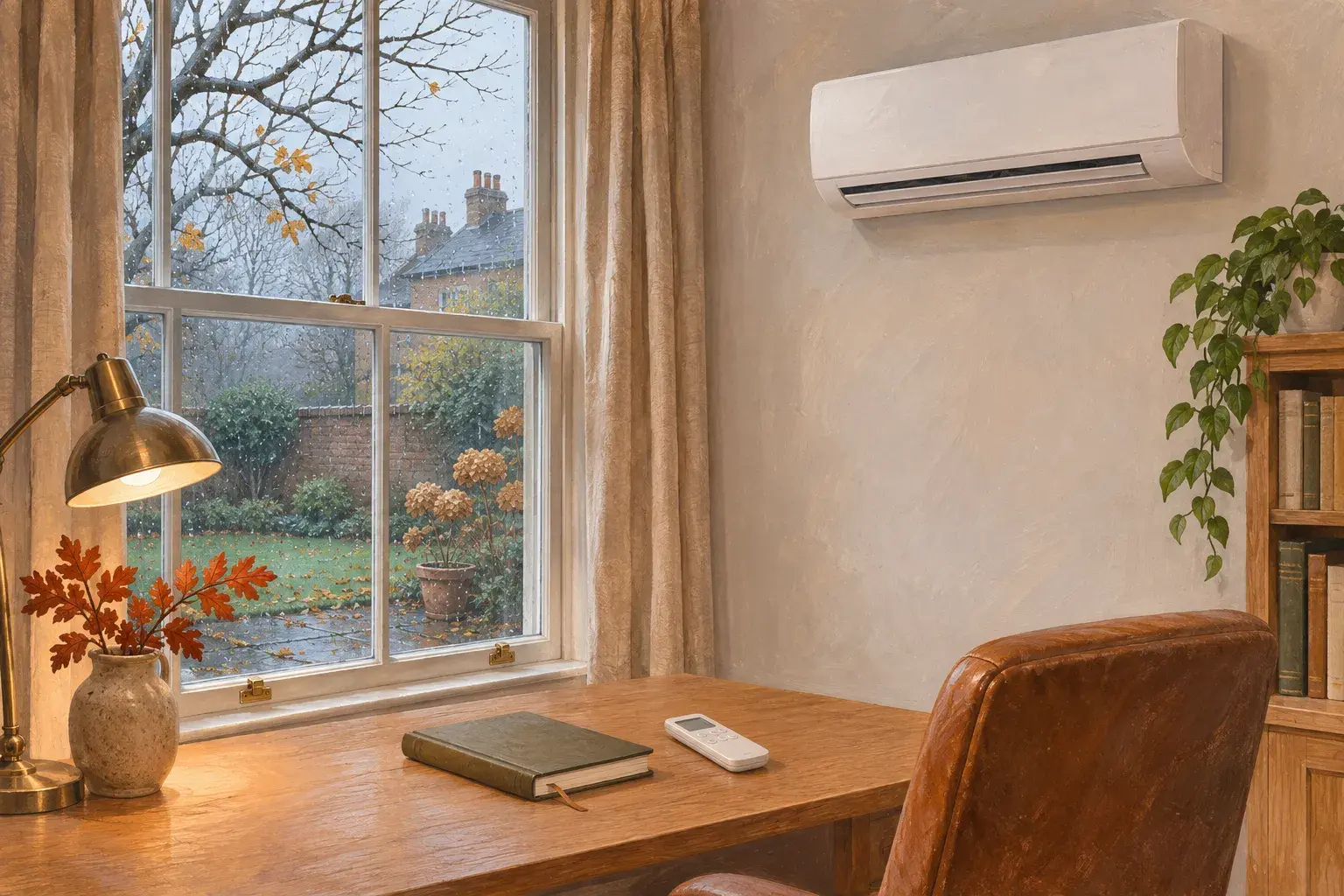
A short pause in heating can be normal: a reversible air conditioner may be warming up, responding to the room reaching its target temperature, or defrosting its outdoor unit. But not every shutdown is defrost. Check the controller and the instructions for your exact model, and whether normal heating returns. Persistent loss of heat or a fault indication needs investigation.
This guide is for fixed split air conditioning used as an air-to-air heat pump. It helps South Wales homeowners understand winter operation and ask better questions before installation—not diagnose an electrical or refrigerant fault themselves.
Image: original AI-generated editorial concept, not a customer installation or a dimensioned layout.
First, notice when the pause happens
The timing is more useful than simply saying “the fan stopped”. Daikin's residential troubleshooting guidance distinguishes a delay at heating start-up, changes in airflow around the set temperature and a temporary interruption for defrost.
| When you notice it | A possible explanation | What to check without opening the equipment |
|---|---|---|
| Immediately after selecting heating | The indoor unit is warming up | The selected mode and the start-up behaviour described in your manual |
| Once the room is comfortable | Temperature control has reduced the demand for heat | The target temperature and any timer or schedule |
| After heating has been running, particularly in cold weather | The outdoor unit may be defrosting | Any documented status indication and whether heating resumes as described |
| Heat does not return, or a warning appears | It needs more than an assumption of normal defrost | Record the indication and follow the manual's troubleshooting/contact instructions |
These are clues, not a remote diagnosis. Two systems can display similar symptoms for different reasons. If the behaviour does not match the manual, ask the installer or manufacturer's support team.
What a defrost cycle actually means
Frost can develop on the outdoor heat exchanger during heating and reduce its ability to transfer heat. The system then runs an automatic defrost operation to remove it. The Daikin CTXF20–35F5V1B operation manual, section 5.3, explicitly explains that its indoor unit does not blow hot air during defrost.
The quiet indoor fan can therefore be part of an intended operating sequence rather than evidence that the system has failed.
LG's explanation of preheating and defrost also describes temporary fan stoppage and automatic return to heating. Its display symbols and louvre behaviour concern the equipment covered by that guidance: do not expect every UK model to show the same icon or move its flap in the same way.
How long should you wait? Use your model's instructions, not a universal online countdown. Daikin's general troubleshooting page gives about three to ten minutes for the defrost symptom it describes. That is a reference example, not a promise for every system or a reason to ignore a warning until ten minutes have passed.
Water outside is a separate observation from a leak inside
Daikin confirms that defrost can produce water and visible vapour outdoors. Do not confuse that explanation with permission to dismiss smoke, a burning smell or an indoor water leak.
The practical installation question is where outdoor water will go. Nesta's homeowner research on air-to-air heat pumps, in its defrost discussion, records both brief heating interruptions and a homeowner's experience of runoff refreezing into a slip hazard.
Before accepting a winter-heating installation, ask the surveyor to explain water management near steps, doors and regularly used paths. Our outdoor-unit placement guide covers the wider siting decision; the point here is to check winter operation as well as summer cooling.
Keep a short pause record, not a trail of resets
If there are no safety warnings and the behaviour appears to match the manual, record one complete event rather than repeatedly changing settings. A useful note for the installer contains:
- Before: selected mode, target temperature, room temperature if available, and whether a timer was active.
- During: when airflow changed, the exact display message or lamp pattern, and any sound you noticed.
- Outside: weather conditions and what is safely visible from ground level—without approaching moving parts or removing panels.
- After: when warm airflow returned and whether the room became comfortable again.
For example, “heating selected; airflow paused after the room had been warming; no warning shown; warm airflow returned without intervention” gives support staff a sequence to assess. “It keeps breaking” does not. This is an illustrative observation, not proof that a particular unit is healthy.
If the room remains cold, the pause lasts beyond the model's documented behaviour, or the pattern changes markedly, arrange advice. Do not keep restarting the supply to make a warning disappear or improvise a way to remove ice. Mitsubishi Electric's defrost guidance warns against interrupting an ordinary defrost cycle and directs unresolved poor heating to the installer. Leave fault investigation to a qualified service person.
For a burning smell, repeated electrical trips or other safety warning, stop using the system and follow its shutdown instructions; isolate only if safe to do so and contact professional help. The CTXF manual's troubleshooting section requires shutdown and dealer contact for specified faults, including repeated operation of safety devices. A leak from the indoor unit also needs attention, not a defrost explanation.
Routine care is a separate subject; see our home air-conditioning servicing guide. A planned service date is not a reason to postpone reporting a fault.
Ask for a winter handover before you buy
If heating is important to your purchase, ask for more than a demonstration of cold air on installation day. Put these questions alongside the proposed model numbers:
- What start-up delay and defrost indications should we expect on this particular controller?
- Which manual section tells us what to wait for, and which symptoms require a call?
- What heating performance has been allowed for at the winter conditions used in the room assessment?
- Where will outdoor water drain, and how have nearby walking routes been considered?
- Who should we contact, and which photographs or fault details will they need?
Normal defrost does not by itself make air conditioning unsuitable for winter use. Equally, calling a pause “normal” does not establish that the selected system will keep your particular room comfortable. That is a design and commissioning question. For the separate decision between heating technologies, read our air conditioning versus electric heating comparison.
Smart Space Living provides fixed air-conditioning installation across its South Wales service areas. Request a survey and quote and say whether you need occasional top-up warmth or regular winter heating, so the proposed system and handover can address that use explicitly.